While researching Prince Mongo—and trying to determine whether my suspicions about him had any factual foundation—I came across a public Facebook comment linking him to two men I had never heard of: Winsor Stockton and Ray Driggers. The commenter wrote:
“Little known fact about ole Prince Mongo . He
had a insatiable appetite for young boys to the
point he was nearly rounded up with Windsor
Stockton and Ray Driggers down in Mississippi
for transporting boys from 7-15 years old.
Prince Mongos awesome speedboat pulled
them right in. He had money so he testified
against the others. He went on to have some of
the best clubs that catered heavily to the
underage .! He is such a great person. All these
facts are readily available.
He literally love’s little boys !”
I contacted the person who posted it, hoping to learn how they knew those names and what evidence—if any—supported the allegation. I sent that message the night before Prince Mongo died.
The comment was not proof. But buried inside it were two unusually specific names.
Winsor Stockton and Ray Driggers were not invented characters from an internet rumor. Both were real men prosecuted in a child-exploitation case uncovered in 1980—a case involving boys, pornography, a wealthy Mississippi planter and a barred farmhouse outside Marks.
Whether Prince Mongo belonged anywhere near that story remained unanswered. But to understand what the allegation might have been pointing toward, I first had to understand the case itself.

The Memphis–Marks Child Exploitation Ring
Five miles outside Marks, Mississippi, at the end of a gravel road, stood a dilapidated black farmhouse with heavy, rusted bars across every window.
Boys came there on weekends.
Some came from Memphis.
Others traveled from as far away as Pennsylvania and Florida.
Most came from single-parent homes—the kind of children easily overlooked, pushed aside, and forgotten. They came from families whose vulnerabilities could be exploited by an adult with money, status, and something to offer.
Joe Benson was the son of a successful cotton and soybean farmer in Marks. He lived on his own 262-acre farm and also managed his father’s 243-acre property.
Joe’s father, Joseph Benson Sr., was a deacon at Marks First Baptist Church. His parents were said to be good people—members of one of the finest families in town. Joe himself sang in the church choir. He had been an honor student in high school and was selected “Most Dignified” by his graduating class in 1963.
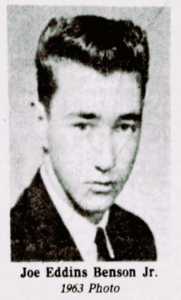
Benson attended the University of Mississippi. He remained unmarried and appeared occupied with farm life. He was capable of handling the family business, but his interests extended beyond cultivating cotton.. He had gone to college. He dressed well. He took up photography and even found part-time work with the local police and sheriff’s departments, photographing evidence in cases involving abused children.
Benson was nice. People could not say otherwise.
But they noticed him arriving at bars with young boys, some of whom appeared to be under the influence of narcotics. Neighbors began talking. Suspicions about Benson’s farm had been mounting for years. One local housewife said she had warned her children to stay away from him. Just what was going on in that black farmhouse?
The townspeople believed something was wrong, but they could not prove it. Benson belonged to a prominent family. His father was a church deacon. So they kept quiet.
And the boys kept coming.
Not just one or two, but groups of them. [1][2]
The Wrong Roll of Film
Then, in March 1980, a single fatal mistake placed Benson’s quiet farm life beneath a national spotlight. Someone dropped off a roll of film at Fox Photo in Memphis. The employees developed it as they would any other roll.
What appeared in those photographs exposed what had been happening in Benson’s farm: boys between the ages of seven and fifteen being sexually abused—not only by Benson, but by several adult men.
A horrified employee called the police. The photographs were turned over to investigators, and the workers identified the customer who had dropped off the film: a local man named Winsor Stockton.
Stockton had apparently mixed up his film and taken the wrong roll to the lab.
Memphis police detained him for questioning on March 24 but initially released him. [4][14][15]
Stockton lived alone in an apartment in Parkway Village and was known to local youths as “Bozo”—a name he even used in the Memphis telephone directory. Neighbors recalled a steady stream of visitors to his apartment. Some were adults; others appeared to be teenagers.
As the investigation widened, police identified another man connected to the photographs: James Woodrow Smith. Originally from Memphis and Crystal Springs, Mississippi, Smith had lived in California for several years and worked as a photographer and film developer. Investigators believed he had helped process the images and may have been the intended recipient of Stockton’s film in Burbank.
When officers arrived at his home on March 25, they found Smith dead in his garage from a shotgun wound to the head.
Police confirmed that Smith was known to be a gay man and had worked professionally as a photographer and film developer. His death was ruled a suicide. Smith apparently left a note but did not indicate the reason for his suicide. [5][14]
Winsor Stockton remained free while police continued their investigation. But this was not his first encounter with law enforcement. In 1974, he pleaded guilty to possession of a controlled substance with intent to sell. He was fined and sentenced to one year in the state penitentiary. [6]
Stockton had not always been under police scrutiny. In 1960, while still in high school, he worked as a recreation counselor at Memphis Boys Town, where his father, Joe Stockton, served as executive director.
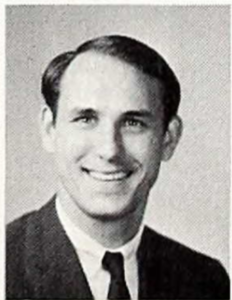
Joe Stockton resigned from Boys Town in 1962 and later became executive director of Tennessee Youth Town in Jackson. Winsor Stockton himself had no known association with Youth Town.
However Winsor later worked for four years as a probation counselor with the Shelby County Juvenile Court—a position that placed him in direct contact with troubled and vulnerable young people. Juvenile Court officials said he was fired in June 1969 for “unsatisfactory performance.” [14]
During investigations over the developed film, Police learned that at least one child—a 13-year-old boy from Senatobia, Mississippi—had been brought to Memphis and sexually abused. The incident resulted in an aggravated rape charge against Stockton. [4][14]
One more man would be exposed in the investigation, Marvin Ray Driggers. Driggers was a High School teacher who had gotten in trouble with authorities in 1978 for blocking an entrance into a high school during a strike. He was arrested for disorderly conduct.
Before his arrest, Driggers wrote a letter to Buntyn Presbyterian Church declaring his innocence and requesting the congregation’s prayers. He instructed the pastor, Rev. J. W. Campbell, not to read it unless he was arrested. The letter claimed he is innocent and would never do what was alleged. Driggers was a member and former youth director of the church. [7][8]
The Farmhouse Raid
On March 26, investigators from Memphis and Mississippi executed a search warrant at Benson’s farm. Inside the house, they found film-processing equipment, undeveloped film, photographs, and other evidence. According to Memphis police legal adviser Clyde Keenan, items recovered during the search confirmed that the farmhouse was the location depicted in the photographs.
The search also helped reveal how the boys had been drawn into the men’s orbit. Investigators did not attribute every gift to a particular man, but they described a pattern involving money, expensive possessions, and trips. “Some of the kids got such things as motorcycles, bicycles, go-carts and cash,” Keenan said. “One kid got a brand new Jeep.” Residents said Benson paid for one boy’s education, while other photographs showed boys with Stockton or Smith on an unidentified beach and at either Disneyland or Disney World.
Keenan said the boys did not tell their parents about the gifts or the activity that followed. Other reporting, however, indicated that investigators had evidence suggesting some parents knew what was happening. Whatever the extent of that knowledge, the secret was not completely contained. Rumors had circulated for years among both youths and adults near Marks. Investigators believed the operation had continued for approximately five years, with some boys brought to the farm from as far away as Philadelphia.. [2][4][15]
Several of the children pictured in the photographs were identified and interviewed.
But Benson was nowhere to be found.
Benson went on the run
Quitman County Prosecutor Larry O. Lewis did not issue a warrant for Benson’s arrest until April 2—a full week after the farmhouse had been searched. By then, residents were already saying that Benson had fled Marks.
Sheriff George J. “Jack” Harrison attempted to serve the warrant but claimed he could not locate him. “He’s not here,” Harrison told a reporter. “If we can’t find him, we can’t find him.” A statement that clearly showed a lack of enthusiasm for tracking down Benson.
Another member of the sheriff’s department appeared equally unconcerned. “I don’t think he’s gone nowhere,” the official said.
Harrison nevertheless insisted that Benson would be arrested quickly now that a warrant had finally been issued. He was wrong. Benson remained missing. [1]
A Wall of Silence
By late July, a Quitman County grand jury had indicted Benson, Stockton, and Driggers. Stockton and Driggers were held in the Memphis City Jail on $20,000 bond each, awaiting proceedings on Mississippi warrants accusing them of “unnatural sexual intercourse.”
Stockton was also facing separate Tennessee charges of using minors for obscene purposes and aggravated rape. He had been released on bond in that case when authorities arrested him on the Quitman County indictment. Driggers, still identified in the press as a high-school teacher, had not been charged in Tennessee.
Benson, meanwhile, had been missing since March.
As the case widened, a wall of silence went up around it. Quitman County prosecutors instructed relatives and law-enforcement officials not to discuss the investigation publicly.
“He told us not to talk about it,” Harrison said, referring to District Attorney Sam Knowlton. According to Harrison, Knowlton had ordered him not to speak to the press—or anyone else—and said he would handle all public statements himself.
When reporters approached Knowlton, however, he refused to discuss the case.
“I have nothing to say about it,” he said. “Nothing.” [8][9]
The Missing Federal Warrant
The FBI was monitoring the investigation because the alleged operation crossed state lines. Boys had reportedly traveled to the farm from Tennessee, Pennsylvania, Florida, and elsewhere. Smith had lived in California, and investigators believed photographs taken in Mississippi had been sent there for processing.
Federal officials eventually expressed surprise that Quitman County authorities had not requested a federal warrant charging Benson with unlawful interstate flight to avoid prosecution. They explained that local authorities would ordinarily seek such a warrant after a fugitive had remained at large for seven to ten days.
Benson had been gone for weeks.
Harrison and Quitman County Attorney Larry O. Lewis denied that political considerations had delayed the effort to arrest him. But the newspapers noted an uncomfortable connection: Benson’s father was a wealthy and influential Marks landowner who had supported Sheriff Harrison’s campaign for reelection.
That did not prove Harrison had protected Benson. But the missing suspect, the delayed local warrant, the failure to request federal assistance, and Harrison’s dismissive response gave the FBI ample reason to examine how the case was being handled.
And by then, federal authorities already had problems with Sheriff Harrison. [10]
The Sheriff Gets Arrested
While Joe Benson remained a fugitive, the sheriff responsible for helping find him was arrested by federal marshals.
That sheriff was George J. “Jack” Harrison, and his position in the Benson investigation was already politically uncomfortable. Benson’s father was a wealthy and influential Marks landowner who had supported Harrison’s campaign for reelection.
The federal indictment did not concern Benson. It involved Harrison’s alleged treatment of Leon Wynn, a burglary suspect confined in the Quitman County Jail. Harrison was charged with conspiracy, civil-rights violations, and obstruction of federal officers.
According to the indictment, Harrison repeatedly beat Wynn and threatened to castrate him. Prosecutors alleged that he slashed the front of Wynn’s trousers with a knife to emphasize the threat, then removed him from a Marks hospital where he was receiving treatment for injuries allegedly sustained in custody.
The Justice Department further accused Harrison of coercing Wynn and other witnesses into lying to the FBI. Wynn initially claimed that his injuries came from falling down a flight of stairs—an explanation officials said Harrison had coached him to give. Marks constable Earnest L. Cook was also indicted for allegedly assisting Harrison.
Harrison was not accused of helping Benson flee. But the circumstances were difficult to ignore. The sheriff responsible for pursuing a fugitive whose influential father had supported his reelection now stood accused, in another case, of coercing a vulnerable prisoner, manufacturing an innocent explanation, recruiting others into the lie, and obstructing federal investigators.
Benson was still on the run.
The sheriff responsible for finding him was now in federal custody. [10]
Someone Told the FBI Where to Find Benson
The search for Joe Benson did not end at an airport, a border crossing, or some distant hideout.
It ended at the Rivermont, a prominent riverfront hotel in downtown Memphis.
In early August 1980, the FBI’s Memphis office received a telephone call from agents in Jackson, Mississippi. They had information that Benson would be arriving at the Holiday Inn-Rivermont.
The newspapers never revealed where that information came from. But this was not a random hotel search. The agents knew the specific hotel Benson intended to visit—and apparently knew when he would be there.
Someone had talked.
It may have been a friend, a relative, a former associate, or someone connected to the hotel. It is also possible that Benson had been under surveillance. Whatever the source, someone knew enough about his movements to place FBI agents at the hotel before he arrived.
Agents from Memphis and Jackson went to the Holiday Inn and waited.
Benson appeared around noon. Officials believed he intended to check into the hotel, but he never got the chance. FBI agents arrested him without incident before he could complete his registration.
After more than four months as a fugitive, the wealthy farmer from Marks had resurfaced less than one hundred miles from his farm—in the same city where the wrong roll of film had exposed the operation.
Benson refused to make a statement.
He was brought before the U.S. District Judge Harry W. Wellford on a federal fugitive warrant charging him with interstate flight to avoid prosecution. Wellford ordered him transferred to Memphis police, who turned him over to Quitman County authorities later that afternoon.
Benson now faced the Mississippi indictment from which he had allegedly fled. Reports described the charges as unnatural intercourse, sodomy, and the exploitation of children.
By then, the investigation had stretched across several states and involved Memphis police, the FBI, Mississippi authorities, California investigators, and the Burbank Police Department. Stockton and Driggers had already been arrested. James Woodrow Smith was dead.
Benson had been the last man missing.
The FBI said his capture did not end the investigation. Authorities believed the operation had distributed illicit material across state lines, from California to Florida. Detectives had identified at least a dozen boys between the ages of seven and fifteen, while other reports indicated that children had been brought to the farm from as far away as Pennsylvania and Florida.
For four months, Benson’s location had supposedly been unknown.
Then a telephone rang in the Memphis FBI office.
Someone knew exactly where he was going. [3][11]
The Case is Closed
In March 1981, legal proceedings against the three men had “come to an end.” All three had pleaded guilty.
Marvin Ray Driggers pleaded guilty to conspiracy to commit unnatural intercourse and received five years in prison. Judge Smith suspended the final two years. He was forbidden from associating with minors while on probation.
Winsor Stockton pleaded guilty to one charge of unnatural intercourse and was sentenced to ten years in prison. As a condition of his probation following incarceration, he was also prohibited from associating with males under eighteen.
Joe Eddins “Ed” Benson Jr. pleaded guilty to two charges of unnatural intercourse and one charge of conspiracy to commit unnatural intercourse, receiving ten years for each sexual offense and five years for conspiracy. Judge Smith suspended one of the ten-year sentences and placed Benson on ten years of probation, while ordering the five-year conspiracy sentence to run concurrently with the remaining ten-year term. Benson therefore faced one active ten-year prison sentence, followed by ten years of probation. [12][13]
After detailing the guilty pleas and sentences, The Commercial Appeal ended its report with a remarkable admission:
“Although there still are Quitman County indictments pending against all three men, sources said those charges would probably be retired to the files.” [13] A Quitman County grand jury had returned further indictments against Benson, Stockton, and Driggers. Yet sources expected those charges to be shelved without prosecution. The surviving article does not identify the acts covered by the remaining indictments.
The legal proceedings had “come to an end” not because every charge had been resolved, but because authorities had apparently decided that the convictions already obtained were enough.
One roll of film exposed the farmhouse, putting a national spotlight on Benson, Stockton, and Driggers. It revealed an operation involving boys, adult men in multiple states, a Memphis apartment, a black barred farmhouse in Mississippi, and a commercial film laboratory in California.
But it did not expose everything.
My investigation into Prince Mongo led me to a public allegation connecting him to Stockton and Driggers. [16]
The allegation is not proof.
Still, it was striking that someone remembered two men whose crimes had all but vanished from public memory forty-four years earlier. After reconstructing the Memphis–Marks case, I returned to my Mongo research, now knowing which names, institutions, and dates to look for. I believe I found a potential connection.
Part Two will examine that possible link. Since Mongo’s death, I have seen growing chatter that newspapers are preparing stories about allegations that he sexually abused boys. For the sake of anyone he may have harmed, I hope those accounts are investigated carefully and brought into the light, victims deserve more than silence.
Sources
- The Commercial Appeal (Memphis), April 3, 1980, p. 13.
- The Memphis Press-Scimitar, April 3, 1980, p. 30.
- The Clarion-Ledger (Jackson, Mississippi), August 9, 1980.
- “Prominent Planter Sought in Pornography Case,” The Memphis Press-Scimitar, April 1, 1980, pp. 1, 13, ; and The Tennessean (Nashville), April 2, 1980, p. 12.
- The Jackson Sun, April 2, 1980, p. 9.
- The Memphis Press-Scimitar, May 1, 1974, p. 4.
- The Memphis Press-Scimitar, October 13, 1978.
- William Fuller, The Commercial Appeal (Memphis), July 28, 1980, p. 13.
- The Mississippi Press, July 30, 1980, p. 2.
- The Memphis Press-Scimitar, April 18, 1980, p. 6.
- Hattiesburg American, August 9, 1980, p. 2.; and The Commercial Appeal (Memphis), August 9, 1980, p. 1.
- “Ex-Teacher Gets Five Years for Child-Sex Role,” The Memphis Press-Scimitar, March 27, 1981, p. 17.
- Sabrina Long, “Porn Charges Net 5-Year Sentence,” The Commercial Appeal (Memphis), March 28, 1981, p. 3.
- Jerome Wright, “Suspect Is Called Friend of Youths,” The Commercial Appeal (Memphis), April 2, 1980, p. 15, clipping supplied by the author.
- Associated Press, “Child Pornography Arrests Expected,” Bristol Herald Courier, April 3, 1980, clipping supplied by the author.
- Public Facebook comment by a Memphis-area resident, screenshot reproduced in this article; copy retained in the author’s files. This citation documents the existence and wording of the allegation, not its truth.
Leave a Reply